Denver Flatbed Freight for Fabricated Steel: Planning Jobsite Deliveries on Tight Schedules
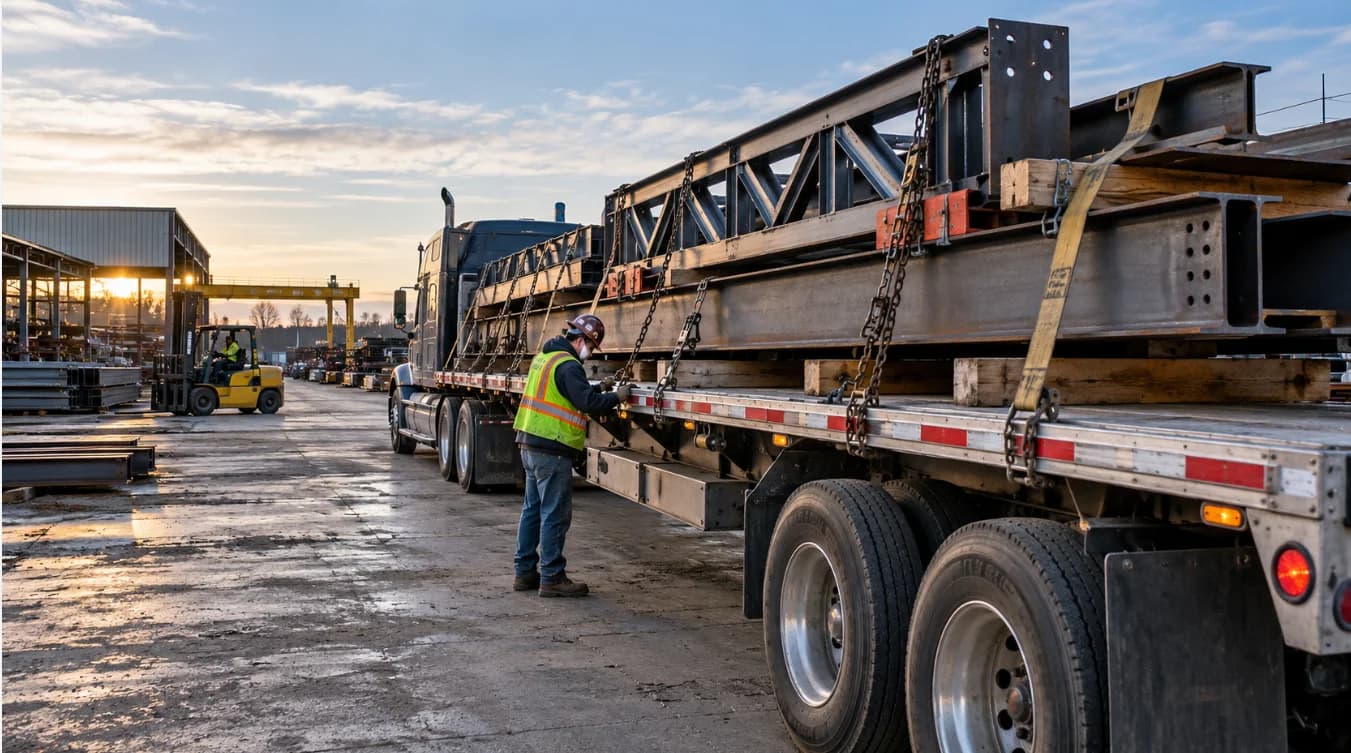
Denver flatbed freight for fabricated steel runs on two schedules: the transportation plan and the jobsite’s installation plan. To keep them aligned, confirm each piece’s final dimensions and weight, match the trailer to the load, and give the freight team a delivery window the site can actually receive. At Freight Squad, we arrange nationwide flatbed shipping, including freight for construction and manufacturing, through vetted transportation providers.
A truck arriving at the gate doesn’t mean the steel is ready to unload. The crew, crane or forklift, staging area, access route, and installation sequence all need to line up. Sorting out those details before dispatch gives everyone a clearer plan and fewer last-minute changes.
Start With the Steel as It Will Ship
Fabrication drawings are useful, but the freight quote needs the finished shipping details. A piece may change after welding, with temporary bracing, lifting lugs, or protective packaging added. Measure each shipping unit in its final form and record its weight.
For a shipment with several beams or assemblies, send a piece-by-piece list rather than a single total. Include:
- Number of pieces and how they’re bundled
- Final length, width, height, and weight for each unit
- Any unusual shape or concentrated weight
- Whether pieces can stack or must travel separately
- Loading method and available equipment
- Photos or drawings that clarify the load
Accurate measurements affect trailer selection, securement, and whether a load needs permits. They also help the transportation provider understand how the steel will sit on the deck and whether its shape calls for special handling.
Our flatbed freight service covers construction materials, steel, prefabricated structures, and other freight that needs open-deck capacity. The shipment details determine which equipment fits. A standard flatbed may work for legal dimensions, while a step deck or extendable trailer may suit loads with different height or length requirements. If the shipment exceeds standard legal limits, it may need heavy-haul equipment and additional route planning.
Match the Delivery Plan to the Installation Sequence
A steel package often arrives in the order it leaves the fabrication shop, not the order the crew needs to install it. If the jobsite expects to erect one section at a time, coordinate the shipment sequence with the project team before loading.
Ask the site contact which pieces the crew needs first and where each group should land. Mark bundles or shipping units clearly, and make sure the delivery documents use the same identifiers as the site’s erection or receiving plan. When the site needs a specific sequence, share that before dispatch so the loading plan can account for it.
A delivery window should include more than a target date. Confirm the appointment time, receiving hours, who will meet the driver, and how long unloading may take. If a crane or forklift must be reserved, coordinate its availability with the truck’s estimated arrival. A missed window can leave the crew waiting or force the site to reschedule equipment.
Confirm That the Jobsite Can Receive the Trailer
Construction sites change quickly. An entrance that worked last month may now be blocked by excavation, stored material, temporary fencing, or another trade’s equipment. Have someone familiar with current site conditions review truck access before dispatch.
Confirm:
- The correct gate and delivery address
- Whether the truck can turn around or needs a specific approach
- Where the driver can stage or wait
- The surface and space available for unloading
- Any site check-in, safety, or escort requirements
- Whether the crew can unload the full shipment during the appointment
Share any restrictions with the transportation team. A narrow entrance, soft ground, overhead obstruction, or limited staging area can affect the approach and unloading plan. If the driver needs to follow site-specific directions, provide them in writing and identify a reachable contact for the day of delivery.
Plan Securement and Weather Protection
Fabricated steel varies in shape and finish. Long beams, columns, trusses, and assemblies can create different securement needs. Tell the freight team about the load’s shape, contact points, lifting features, and any surfaces that need protection. The transportation provider can then assess the appropriate securement and equipment for the freight.
FMCSA cargo securement rules set requirements for cargo transported on commercial motor vehicles, including tiedowns and securement systems. Review the FMCSA cargo securement rules when you need the federal requirements. The exact method depends on the freight and how it’s loaded, so give the provider the details early.
Open-deck freight also faces weather during transit. Let the freight team know if rain, road debris, or exposure could damage a coating, finish, or other part of the steel. Some loads need tarping, while others may not. Freight Squad’s flatbed page notes that tarping requirements belong in the quote and equipment plan, so disclose them before dispatch.
Build Realistic Time Into the Schedule
When a project deadline is close, it can be tempting to plan around the shortest possible transit estimate. That leaves little room for a delayed pickup, a change in site readiness, or an appointment that takes longer than expected.
Work backward from the time the crew needs the steel. Include the fabrication-ready date, loading time, transportation time, receiving window, and unloading duration. Keep the delivery contact available in case the site schedule changes while the truck is moving. If the steel is part of a sequence of deliveries, confirm how a delay to one load affects the next.
Share the required delivery date and the reason behind it when requesting a quote. A firm installation date, a site with limited receiving hours, and an estimated arrival are different planning details. Freight Squad arranges Denver freight shipping across flatbed and other modes, with one account manager connected to the shipment from quote through delivery.
Know When the Load Needs Heavy-Haul Planning
Not every steel shipment fits standard flatbed dimensions or weight limits. Long or unusually tall pieces, heavy assemblies, or freight that exceeds legal limits may require specialized trailers, permits, escorts, or route planning. Those requirements can change the schedule, so don’t wait until the steel is ready to raise them.
Send the complete dimensions and weight, along with loading and unloading details, as early as possible. Our heavy-haul service covers oversized and overweight freight, with specialized transportation providers and coordination for route, permit, and escort requirements.
The right equipment depends on the actual load and route. A trailer that works at the fabrication facility still needs to meet road restrictions and reach the jobsite safely.
Request a Quote With the Details Ready
A useful quote request connects the steel to the delivery conditions. Include the origin, destination, ready date, piece count, final dimensions and weight, loading method, trailer requirements, delivery appointment, unloading plan, and any site access restrictions. Add photos or drawings when they clarify an unusual shape or handling need.
At Freight Squad, we coordinate flatbed freight nationwide through vetted transportation providers and keep one account manager connected to each load. For an upcoming Denver delivery, request a freight quote with the steel details and jobsite schedule. Confirming the load and receiving plan together gives the fabrication team, freight provider, and site crew a shared delivery target.
Recent Posts
Seattle Port Freight: How to Plan Drayage After an Import Container Is Released
OCTOBER 20, 2026
El Paso Cross-Border Freight for Manufacturers Shipping Between Texas and Mexico
SEPTEMBER 28, 2026

Boston Pharmaceutical Freight: Building a Reliable Cold Chain Across New England
SEPTEMBER 21, 2026
Las Vegas Convention Freight: How to Ship Booths and Displays Without Missing Mo...
SEPTEMBER 14, 2026

How to Package LTL Freight for Multiple Terminal Transfers
AUGUST 24, 2026