How to Package LTL Freight for Multiple Terminal Transfers
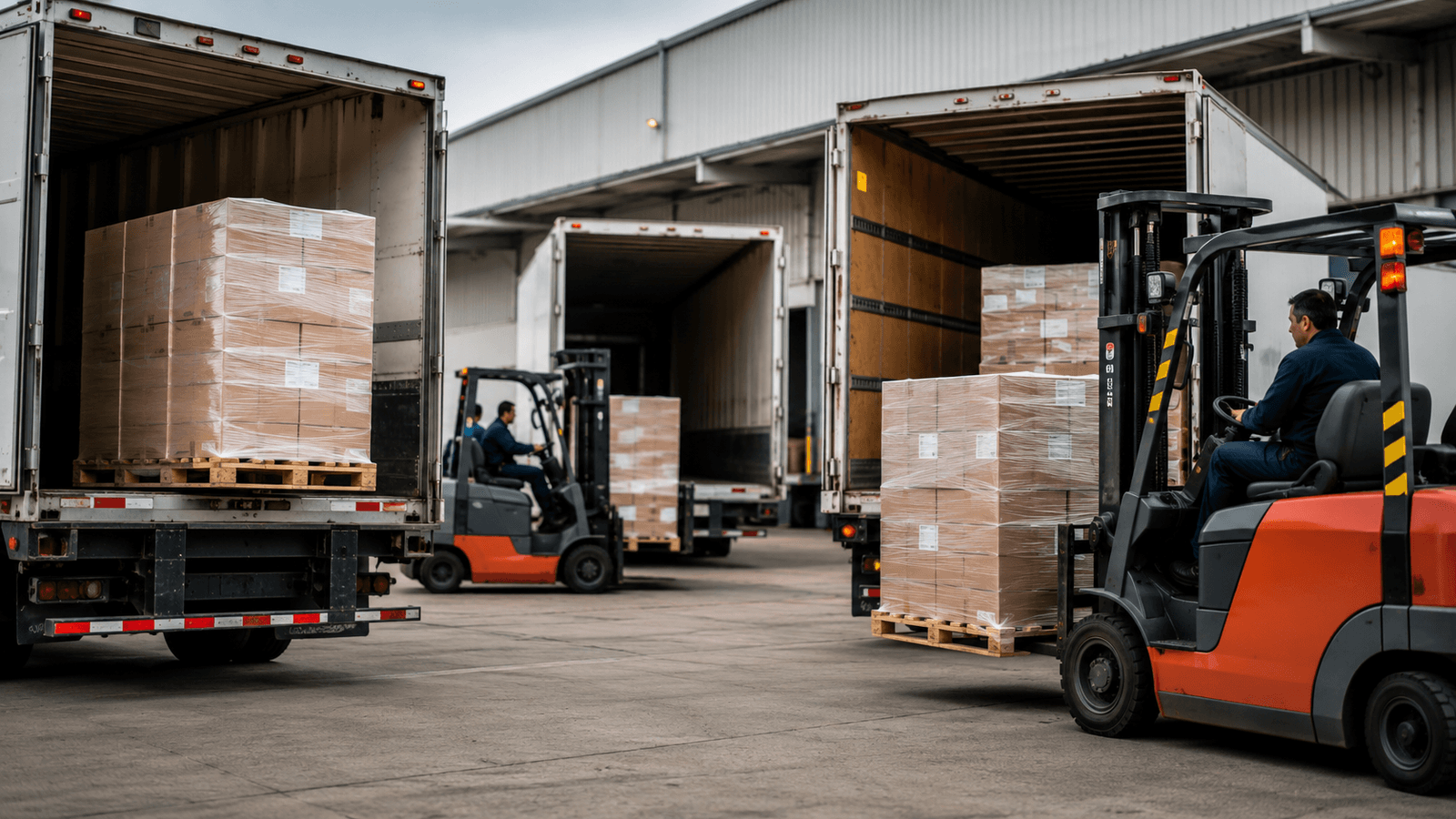
LTL freight packaging needs to account for repeated handling, not just the miles between pickup and delivery. Unlike a full truckload that typically stays on one trailer, an LTL shipment may move through terminals where it is unloaded, sorted, repositioned, and loaded again. A pallet that looks stable on the shipping dock still needs to tolerate forklift handling, vibration, shifting freight, and contact with other shipments throughout the trip.
At Freight Squad, our LTL freight shipping service is built for smaller shipments that share trailer space with freight from other shippers. Freight class, dimensions, weight, stackability, packaging, and special handling details all matter when preparing the load.
Why LTL Freight Packaging Needs Extra Attention
A standard LTL move can involve several handling points between origin and destination. Freight may travel from the pickup route to an origin terminal, move through one or more intermediate terminals, and reach a destination terminal before final delivery.
Each transfer creates another opportunity for a pallet to be lifted, turned, placed beside other freight, or moved between trailers.
That doesn’t mean LTL is unusually rough or unsafe. It means the packaging needs to match the transportation environment.
The National Motor Freight Traffic Association’s LTL packaging guidance addresses packaging specifications intended to withstand the conditions freight encounters in the motor carrier network. NMFC packaging provisions cover areas such as boxes, crates, pallets, and commodity-specific packaging requirements.
A shipment prepared only for storage in a warehouse may not be ready for the same handling.
Start With a Pallet That Supports the Entire Load
The pallet becomes the foundation of the shipment, so inspect it before stacking anything.
Avoid pallets with broken deck boards, exposed nails, missing runners, or obvious structural damage. The pallet should support the weight of the freight without sagging or creating weak points where a forklift could damage the product.
Keep boxes and products inside the pallet footprint whenever practical. Overhanging cartons are vulnerable because their edges no longer have support underneath them. They can also be hit by nearby freight or handling equipment.
Weight distribution matters too. A pallet with most of its weight concentrated on one edge is harder to handle safely than a balanced unit. Place heavier products toward the bottom and distribute dense items across the usable pallet area.
For machinery, equipment, drums, or other concentrated loads, the pallet or skid needs enough structural capacity for that specific weight. A standard lightweight pallet that works for boxed consumer products may be completely inappropriate for a dense industrial component.
Build One Stable Handling Unit
Individual cartons shouldn’t move independently once the pallet leaves your dock.
Stack boxes so the load forms a stable unit. Avoid large gaps between cases, uneven layers, or a narrow tower at the top of the pallet. If cartons vary in size, arrange them so each layer has enough support from the layer below.
Loose space inside boxes matters as well. A carton that collapses when pressure reaches its top or corners can weaken the entire pallet.
Once the load is arranged, secure it to the pallet rather than wrapping only the boxes to each other.
Stretch wrap should capture the pallet itself at the bottom and continue upward around the load. Multiple passes around the lower portion provide additional stability where the freight meets the pallet.
Depending on the commodity, strapping or banding may make sense for heavier cartons, dense materials, or products that could shift inside stretch wrap. Use materials appropriate for the product so straps don’t crush cartons or damage finished surfaces.
Protect Corners and Exposed Surfaces
Corners often take the first hit when freight moves through a terminal.
Corner boards or edge protectors add structure to wrapped cartons and spread pressure from straps. They’re especially useful on tall palletized loads where the top layers could lean or deform.
Look beyond the outside corners. Exposed handles, controls, fittings, tubing, finished surfaces, glass, and other projections deserve protection before the shipment leaves.
If an irregular part can be removed and packaged separately without creating another problem, doing so may reduce the chance of damage. Otherwise, use blocking, cushioning, a protective frame, or another packaging method that keeps vulnerable components away from the outside edge.
A machine sitting securely on a skid can still arrive damaged if an exposed control panel extends several inches beyond the protected footprint.
Decide Whether the Freight Should Be Crated
Some products need more protection than stretch wrap and a pallet provide.
A crate may be appropriate for fragile machinery, sensitive components, unusual shapes, or freight with surfaces that shouldn’t come into contact with other shipments. The crate also needs to support normal material handling. It should have a strong base, adequate structural support, and enough clearance for the intended handling equipment.
Internal movement is another concern. Putting a product inside a wooden enclosure doesn’t secure it automatically. The item may still need blocking, bracing, cushioning, or attachment to the base.
For especially unusual freight, start with the product’s own handling requirements. Manufacturer instructions may specify acceptable lifting points, tilt restrictions, shock limits, orientation, or areas that cannot support weight.
Think Carefully Before Calling Freight Stackable
Stackability affects how efficiently an LTL carrier can use trailer space.
If your shipment is listed as stackable, the packaging should actually support that condition. A flat top alone doesn’t mean the freight can carry another handling unit safely.
Consider the strength of the cartons, product inside them, pallet stability, top surface, and total load structure. Packaging can compress during transit, particularly if boxes contain empty space or lack enough vertical support.
If another pallet could damage the freight, disclose that before the shipment is quoted.
Likewise, don’t rely on a handwritten “Do Not Stack” note as the complete handling plan for particularly sensitive freight. Discuss the restriction when arranging transportation so the shipment details accurately reflect how the handling unit needs to move.
Secure Small or Loose Pieces Before Pickup
Anything loose at pickup has a chance of becoming separated later.
Small boxes sitting on top of a larger pallet should be incorporated into the unit rather than placed there at the last minute. Loose tubes, buckets, cartons, hardware, or attachments need secure packaging.
The same principle applies to product inside cartons. Internal packaging should keep items from sliding, striking one another, or putting repeated pressure on the outer box.
A pallet may remain perfectly upright while the product inside its cartons moves enough to become damaged.
Before wrapping the final load, gently check whether anything shifts when the pallet is pushed or handled. Visible movement on the shipping dock usually becomes more pronounced after repeated transfers.
Make Labels Easy to Find and Read
A well-built pallet still needs clear shipment identification.
Place shipping labels where terminal personnel can see them without moving freight or cutting through the packaging. Avoid placing the only identifying information on the top of a tall pallet where it becomes difficult to read after loading.
Remove or cover old routing labels from reused packaging so they don’t create confusion.
The bill of lading and shipment information should also match what is physically being tendered. Confirm the number of handling units, commodity description, weight, dimensions, and other required shipment details before pickup.
Take the final outside dimensions after wrapping, corner protection, or crating has been completed. Packaging adds size, and LTL pricing depends partly on the shipment’s dimensions and weight. Freight Squad also reviews freight class and accessorial requirements when quoting LTL shipments.
Photograph the Freight Before It Leaves
Take clear photos once the shipment is completely packaged.
Capture the full pallet from several sides, the condition of the cartons or crate, labels, stretch wrap or banding, and any unusual equipment or exposed areas.
For machinery and higher-value industrial freight, closer photos of protected components can create a useful condition record.
Photos take very little time compared with trying to reconstruct the condition of a shipment after it has already left the facility.
Check the Delivery Conditions Too
Packaging is only one part of preparing an LTL shipment.
Confirm whether the receiver has a loading dock or forklift, whether an appointment is required, and whether the address qualifies as a limited-access location. A shipment that reaches its destination in perfect condition can still encounter delays or additional charges when the delivery requirements weren’t disclosed.
Our guide to freight accessorial charges explains why services such as liftgate delivery, appointments, inside delivery, and limited-access delivery should be identified during quoting rather than after the truck arrives.

What to Check Before Shipping LTL Freight
Before the driver arrives, review the shipment as a complete handling unit:
- Use a sound pallet or skid that supports the freight.
- Keep the product within the pallet footprint where practical.
- Distribute weight so the handling unit remains stable.
- Secure cartons or products to the pallet.
- Protect corners, edges, and vulnerable components.
- Fill internal voids that allow products or cartons to move.
- Confirm whether the shipment is actually stackable.
- Make labels visible and remove outdated routing labels.
- Measure and weigh the freight after final packaging.
- Photograph the completed shipment before pickup.
- Confirm dock, liftgate, appointment, and access requirements at both ends.
LTL freight works well for shipments that don’t need an entire trailer, but the freight has to be prepared for the way an LTL network operates. Building a stable handling unit from the beginning reduces avoidable movement and gives the packaging a better chance of holding up through every terminal transfer.
If you’re preparing an upcoming LTL load, send us the origin, destination, commodity, pallet count, packaged dimensions, weight, stackability, and any special pickup or delivery requirements. We’ll use those details to match the shipment with an appropriate LTL transportation provider and build the quote around the actual load.
Recent Posts
El Paso Cross-Border Freight for Manufacturers Shipping Between Texas and Mexico
SEPTEMBER 28, 2026
Boston Pharmaceutical Freight: Building a Reliable Cold Chain Across New England
SEPTEMBER 21, 2026
Las Vegas Convention Freight: How to Ship Booths and Displays Without Missing Mo...
SEPTEMBER 14, 2026

How Produce Season Affects Refrigerated Freight Capacity
AUGUST 5, 2026
Houston Heavy-Haul Shipping: Planning Industrial and Energy Loads
AUGUST 4, 2026